A new scientific paper analyses how the MAB Programme is implemented across Mediterranean biosphere reserves.
The study was made possible thanks to the involvement of 38 MedMAB members who responded to a survey circulated within the network.
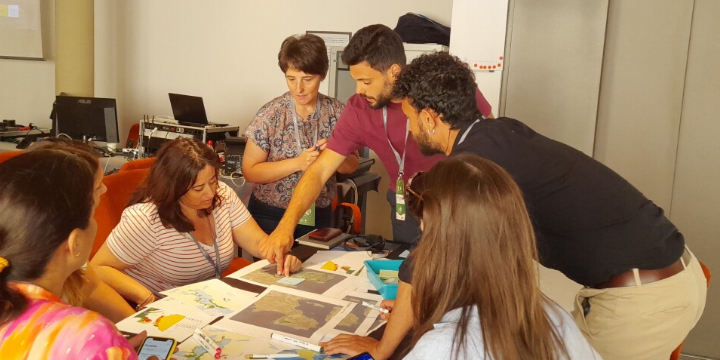
The paper is a collaborative work of international experts in the framework of the International University Campus on Mediterranean Biosphere Reserves.
Mediterranean biosphere reserves are facing rapidly evolving policy expectations. Understanding how they interpret and apply UNESCO’s guidance has never been more important. A new study sheds light on how these sites translate into local action.
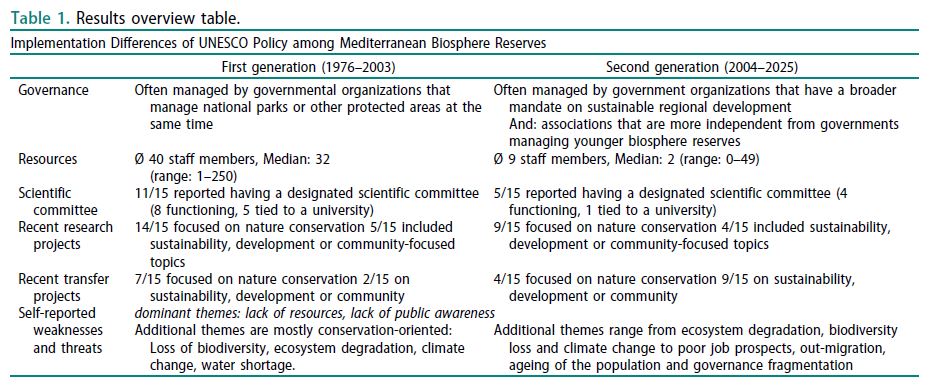
The paper, “Exploring implementation differences of UNESCO policy among 38 biosphere reserves across 14 Mediterranean countries”, investigates how policy guidelines developed by UNESCO at the international level—particularly those outlined in the 1995 Seville Strategy—are implemented at local level. The data reveal differences between sites designated before and after major policy shifts.
The research was made possible thanks to the active involvement of the MedMAB network. Data were collected through a survey distributed among MedMAB members, which received responses from 40 managers representing 38 biosphere reserves of 14 countries. This collaborative effort reflects the strong commitment of the network to shared learning and continuous improvement.
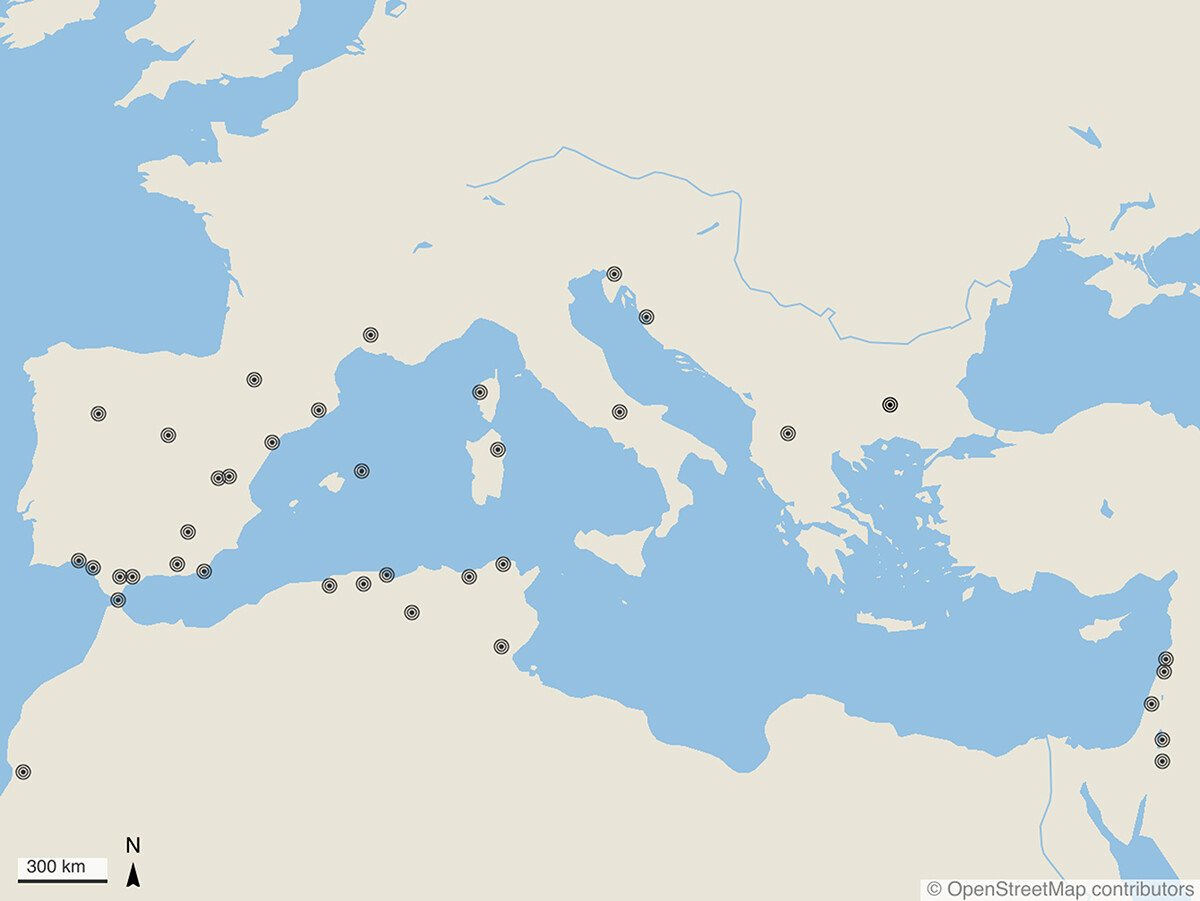
Overview of the location of the biosphere reserves represented in the survey data
Published in Ecosystems and People, the paper was part of Saleem Farouq Haddad master thesis developed in the framework of the International University Campus for Mediterranean Biosphere Reserves. He won the UNESCO MAB Young Scientist Award for this work. The paper also includes contributions from Roser Maneja and Mari Carmen Romera, both part of the UNESCOMED Centre team.
Key findings of the study
The study shows that biosphere reserves designated more recently tend to adopt more participatory governance models and are generally better aligned with evolving MAB policy priorities. In contrast, older reserves often face greater challenges when adapting to newer policy frameworks.
At the same time, newer biosphere reserves frequently operate under more precarious conditions, with limited staff capacity and fragmented local governance structures. Despite their strong alignment with MAB principles, these constraints can hinder their ability to fully meet the programme’s ambitions, underlining the need for targeted support mechanisms to facilitate effective policy implementation.
Overall, the study highlights the importance of strengthening collaboration between science and management. In this context, the UNESCOMED Centre staff would like to thank all the biosphere reserves that contributed to this article. Through initiatives such as these, early-career researchers and biosphere reserve managers work closely together, combining scientific knowledge with on-the-ground experience. This approach helps generate practical insights that support sustainability and contribute to more effective governance of Mediterranean biosphere reserves.
Access the full article here.
8 October 2026
The International University Campus for Mediterranean Biosphere Reserves brings together students and researchers at Castellet Castle
30 September 2026
Italy’s Monte Peglia UNESCO MAB Biosphere Reserve joins the MedMAB network, bringing the network to 73 Biosphere Reserves.
28 September 2026
· At the III Spanish Congress of Biosphere Reserves, the La Siberia–La Palma Strategic Action Plan 2026–2035 for the Spanish Network was approved.
· UNESCOMED participates in the congress showing how Mediterranean cooperation boosts resilience.
· La Siberia, host of the congress, shows how the designation as a Biosphere Reserve is an opportunity for the territory.