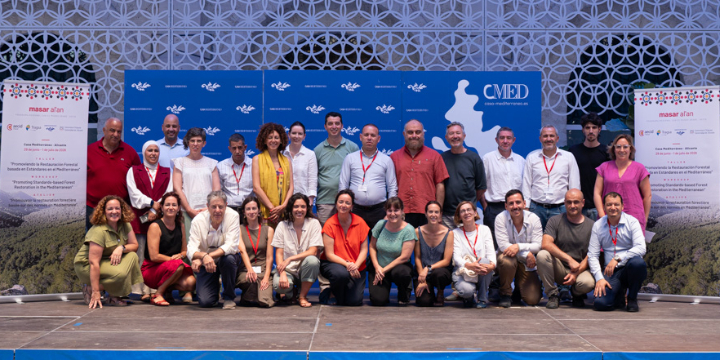
The International Centre for the Mediterranean Biosphere Reserves (UNESCOMED) participated in the International Workshop on Standards for Promoting Forest Restoration in the Mediterranean, held from 29 June to 1 July in Alicante, Spain.
Representing UNESCOMED, the Centre's Coordinator Núria Pou Álvarez delivered a presentation entitled "The Mediterranean Biosphere Reserves: Living Labs for ecological restoration", highlighting the unique contribution that UNESCO Biosphere Reserves can make to advancing high-quality ecological restoration. Her participation was supported by the Abertis Foundation, the Centre's main promoter through its commitment to sustainable development and the UNESCO MAB Programme.
Biosphere Reserves: ideal territories to develop and validate restoration standards
During her presentation, Núria Pou highlighted that “the Mediterranean Network of Biosphere Reserves, the MedMAB, offers an exceptional framework for developing, testing and validating ecological restoration approaches under real environmental and social conditions”.
Rather than being exclusively protected areas, Biosphere Reserves are territories where biodiversity conservation, sustainable development and scientific research are integrated through participatory governance. By bringing together local communities, researchers, public administrations and civil society, they provide ideal conditions to implement the 10 Principles for ecosystem restoration to guide the United Nations Decade 2021–2030.
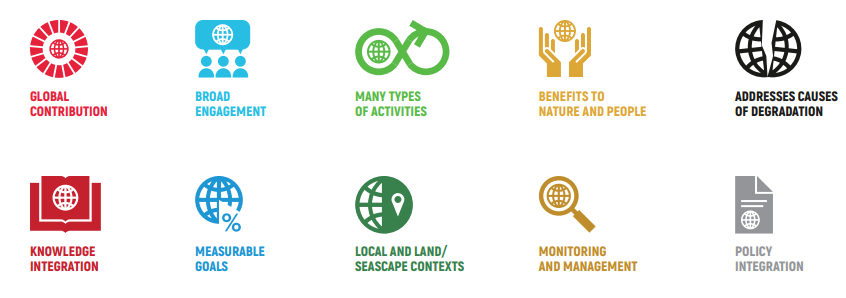
These principles recognise that successful restoration extends beyond ecological outcomes. It should also be based on sound scientific evidence, long-term monitoring, adaptive management, stakeholder engagement, respect for local knowledge and consideration of the social and cultural dimensions of restoration.
Mediterranean Biosphere Reserves already incorporate many of these elements through their governance model and long-term experience in balancing nature conservation with human well-being. As a result, they represent real-world Living Labs where innovative restoration practices can be tested, evaluated and shared across the Mediterranean region.
Sharing restoration experiences across the Mediterranean
Organised by the Masar Al'An Programme (AECID) together with Tragsa, the University of Alicante and Casa Mediterráneo, the workshop brought together researchers, restoration practitioners, policy-makers and international organisations committed to advancing ecological restoration across the Mediterranean region. The workshop fostered dialogue among a diverse group of 30 stakeholders, including national representatives from Algeria, Jordan, Lebanon, Morocco, Spain and Tunisia, alongside representatives of international organisations including IUCN Med, EFIMed, FAO, the Union for the Mediterranean (UfM), the Society for Ecological Restoration (SER), CTFC and WWF.
The workshop also offered the opportunity to learn from two emblematic restoration initiatives. At Sierra Espuña Regional Park, participants explored one of Spain's earliest large-scale forest restoration projects, initiated in the late XIX century under the leadership of Ricardo Codorníu, whose pioneering vision helped transform a degraded mountain landscape into today's resilient Mediterranean forest.
The second field visit focused on the Priority Action Framework for the Recovery of the Mar Menor, where participants examined ongoing efforts to restore ecological functions in Europe's largest saltwater lagoon. The programme also included visits to former mining sites, where restoration actions are stabilising mine tailings with high concentrations of heavy metals before revegetation and landscape integration.
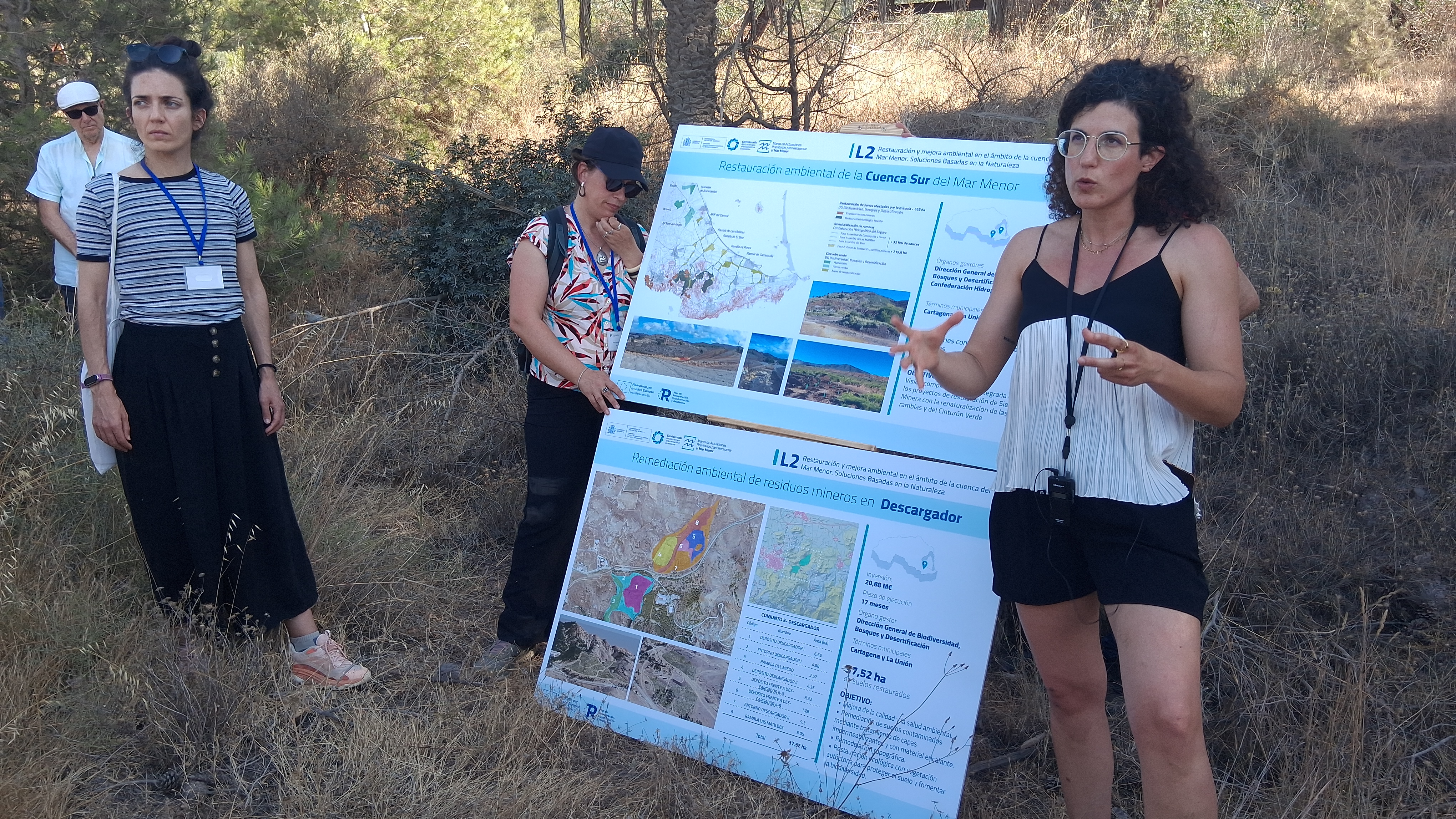
Beyond the technical programme, the workshop strengthened connections between Mediterranean organisations working towards shared restoration goals. These exchanges open new opportunities to explore long-term collaboration, reinforcing the role of the MedMAB Network as a platform for innovation, knowledge exchange and ecological restoration throughout the Mediterranean.
8 October 2026
The International University Campus for Mediterranean Biosphere Reserves brings together students and researchers at Castellet Castle
30 September 2026
Italy’s Monte Peglia UNESCO MAB Biosphere Reserve joins the MedMAB network, bringing the network to 73 Biosphere Reserves.
28 September 2026
· At the III Spanish Congress of Biosphere Reserves, the La Siberia–La Palma Strategic Action Plan 2026–2035 for the Spanish Network was approved.
· UNESCOMED participates in the congress showing how Mediterranean cooperation boosts resilience.
· La Siberia, host of the congress, shows how the designation as a Biosphere Reserve is an opportunity for the territory.