A Geography student from the Autonomous University of Barcelona carried out fieldwork in Morocco within the framework of the International University Campus on Mediterranean Biosphere Reserves.
The research explores socio-ecological resilience in the Arganeraie Biosphere Reserve in response to climate change and sustainable development challenges.
Visits to rural communities and WEFE Nexus-based initiatives helped connect academic research with local knowledge on sustainable resource management.
Nora Ouanguich, a geography student at the Autonomous University of Barcelona, travelled to Morocco to conduct fieldwork for her final Bachelor’s thesis titled “Analysis of socio-ecological resilience in the Arganeraie Biosphere Reserve (ABR)”. This activity is part of the International University Campus on Mediterranean Biosphere Reserves.
On her first day, she visited the ANDZOA offices, where she joined a seminar alongside two final-year master's students from the “Master en gestion territoriale de l’environment et dévelopment durable”. The session provided an opportunity to present ongoing research, receive constructive feedback, and explore synergies between projects. One of the students focuses on the monitoring of ecosystemic services within the Arganeraie BR, while the other is focused on sustainable market solutions and business models.
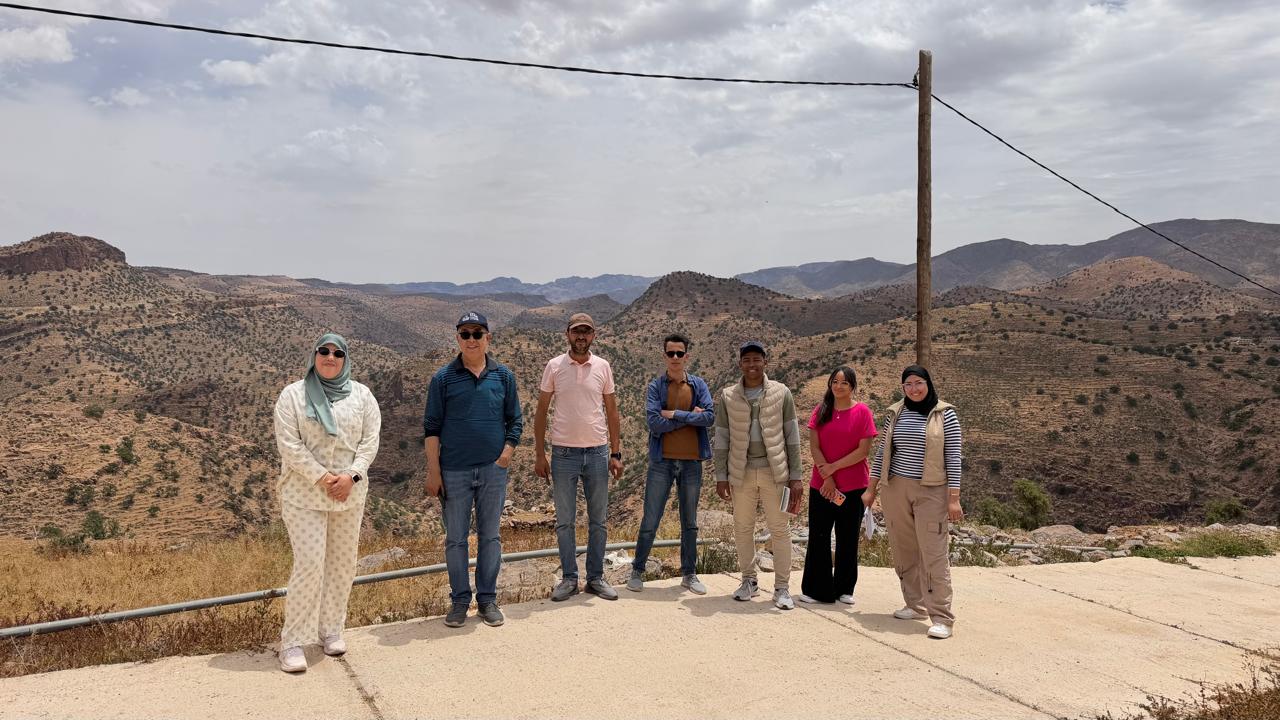
On the following day, all the students carried out a field trip to the province of Chtouka Aït Baha to visit two villages located in the transition zone between the foothills of the Western High Atlas and the inland plateaus.
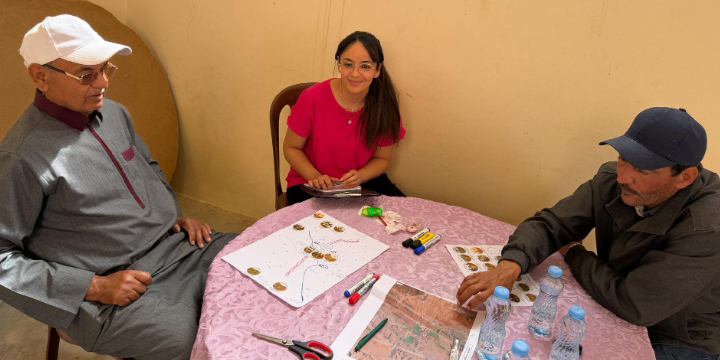
They first visited the Imi Oughgami douar, located in the rural commune of Ait Milk. There, Nora, together with Mr Aziz Afker, conducted two separate participatory mapping workshops with men and women of the douar with the purpose of determining the main resilience and vulnerability factors, as well as understanding the needs of the local community.
Afterwards, the students visited a WEFE Nexus-based adaptation and mitigation initiative implemented in the douar. The project consists of cactus, carob and argan plantations designed to guarantee food production while contributing to ecosystem conservation. The crops are irrigated through efficient drip irrigation systems (an example of sustainable water management), while the water is pumped through solar-powered systems (ensuring a renewable energy supply).
The visit also included plantations established by the ANDZOA within the framework of the arganiculture project.
Thereafter, the group visited the Ifghal Nbahssoun douar, located in the rural commune of Tizi N’Takoucht. In response to the area’s steep and rugged terrain, local communities have developed different forms of terraced agriculture. Within the framework of the RES-MAB project, community gardens and nurseries have been established for carob, almond, cactus and tomato cultivation.
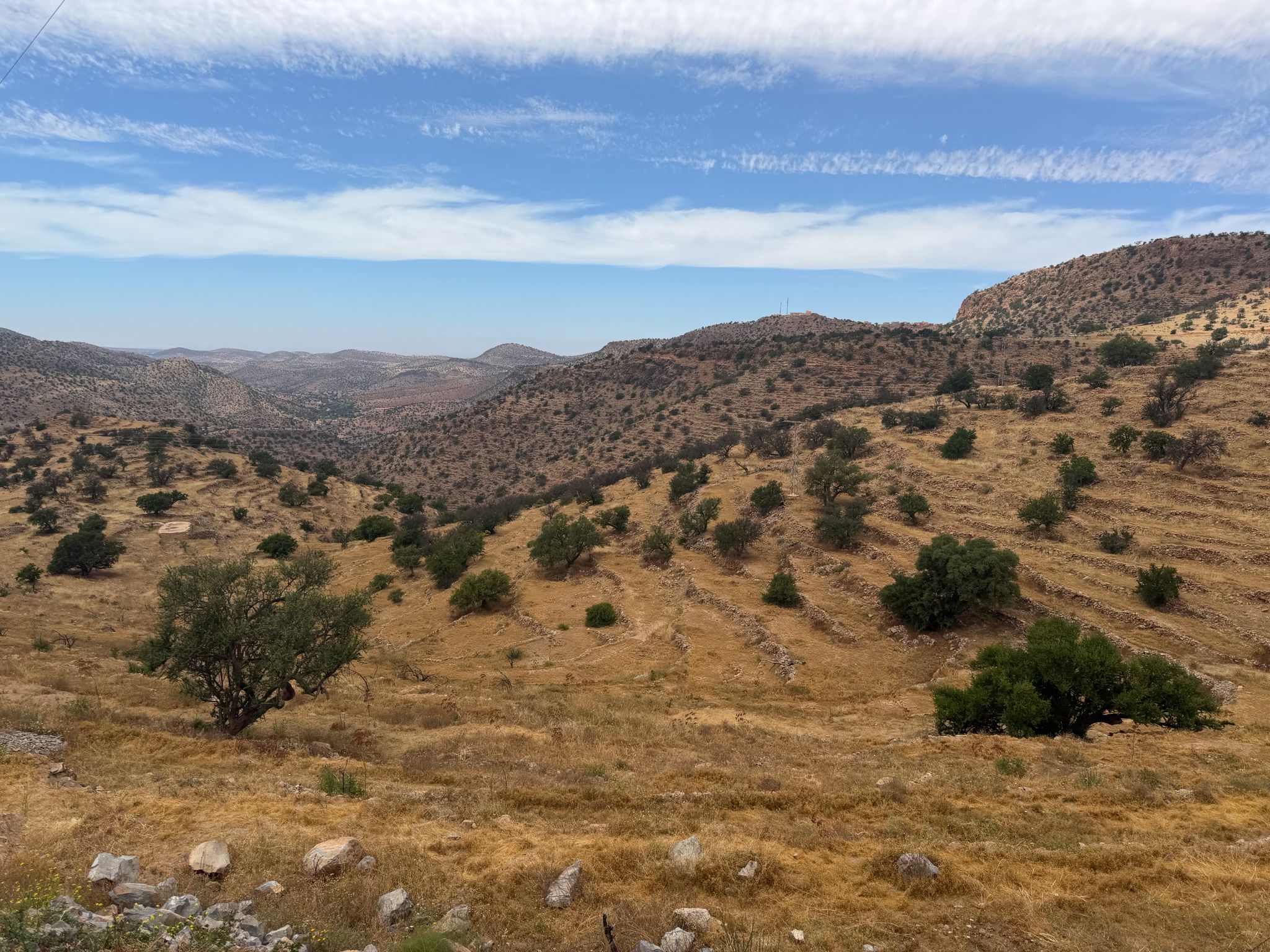
Overall, the fieldwork conducted in the ABR provided a valuable opportunity to gain deeper insight into the territory's socio-ecological dynamics and the challenges associated with climate resilience and sustainable development while fostering the integration of academic and local knowledge.
8 October 2026
The International University Campus for Mediterranean Biosphere Reserves brings together students and researchers at Castellet Castle
30 September 2026
Italy’s Monte Peglia UNESCO MAB Biosphere Reserve joins the MedMAB network, bringing the network to 73 Biosphere Reserves.
28 September 2026
· At the III Spanish Congress of Biosphere Reserves, the La Siberia–La Palma Strategic Action Plan 2026–2035 for the Spanish Network was approved.
· UNESCOMED participates in the congress showing how Mediterranean cooperation boosts resilience.
· La Siberia, host of the congress, shows how the designation as a Biosphere Reserve is an opportunity for the territory.