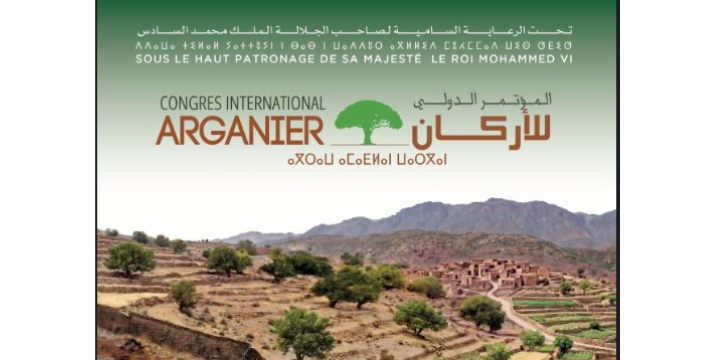
From 8th to 10th May, representatives of the International Centre for the Mediterranean Biosphere Reserves (UNESCOMED) participated in the 8th International Congress of the Argan Tree held in Essaouira, Morocco, under the theme “From Argan Forest to Arganiculture: The Argan Tree as a Pillar of Water Resilience for Ecosystems, Territories, and Communities.”
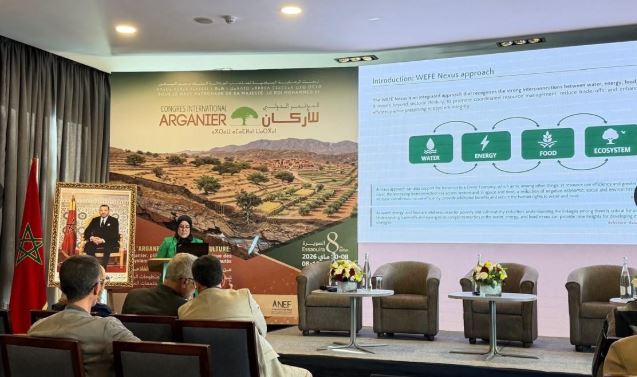
Dr. Roser Maneja, our Scientific Director, and Dr Quim Zaldo, researcher from the Forest Science and Technology Centre of Catalonia, attended the event and contributed to two round tables, one related to the WEFE nexus approach aligned with the RES-MAB project, and the other related to the governance of Biosphere Reserves.
The congress highlighted the urgent need to address increasing pressures affecting the Arganeraie ecosystem, including climate change, prolonged droughts, irregular rainfall, urbanization and natural resource overexploitation. In this context, particular attention was given to integrated Water–Agriculture–Ecosystem Nexus solutions and the role of innovation, scientific research and international cooperation in strengthening territorial resilience in which UNESCOMED contribute.
The argan tree plays a fundamental ecological, social and cultural role, contributing to soil stabilization, water regulation, biodiversity conservation and local livelihoods and it is the symbol of the Arganeraie Biosphere Reserve.
The Reserve, established in 1998, covers more than one million hectares and represents a unique agro-sylvo-pastoral ecosystem that supports over 2.5 million people. The Biosphere Reserve is member of the MedMAB Network, and co-organizer of the Congress.
Integrated WEFE Nexus approach for resilience and sustainability
The round table, Integrated Water–Agriculture–Ecosystem Management: Nexus Approach, was mainly focused on climate resilience, sustainable arganiculture and the WEFE Nexus approach (Water-Energy-Food-Ecosystems).
During his participation, Dr. Quim Zaldo, as a researcher of the RES-MAB project, emphasized the importance of continuous scientific monitoring and meaningful data interpretation to better understand interactions between water, food systems and ecosystems in Mediterranean Biosphere Reserves.
The session also featured Mr. Aziz Afker, from ANDZOA, who presented lessons learned from the RES-MAB project, including decision-support tools, innovative solutions and new business models involving the private sector to strengthen territorial resilience in the face of climate change.
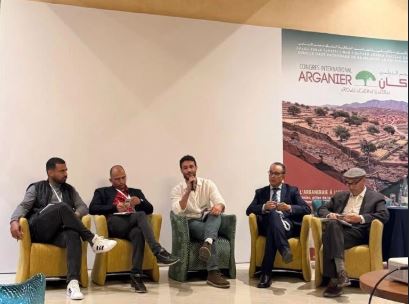
The discussions highlighted the importance of international cooperation, innovation and integrated governance in promoting sustainable development and resilient ecosystems across Mediterranean territories.
Governance, Scientific Diplomacy and Mediterranean Cooperation
Dr. Roser Maneja participated in the round table dedicated to Biosphere Reserves’ governance. During her intervention, she highlighted the importance of institutional governance, scientific diplomacy and strengthened collaboration among Mediterranean countries to address climate change and support resilient ecosystems and communities.
She also introduced the Mediterranean Biosphere Reserve Network (MedMaB), as a strategic platform for cooperation, exchange of knowledge and dissemination of best practices among Mediterranean Biosphere Reserves.
In addition, she stressed the importance of involving universities and research centres in these exchanges in order to strengthen the connection between scientific and technical knowledge and local action.
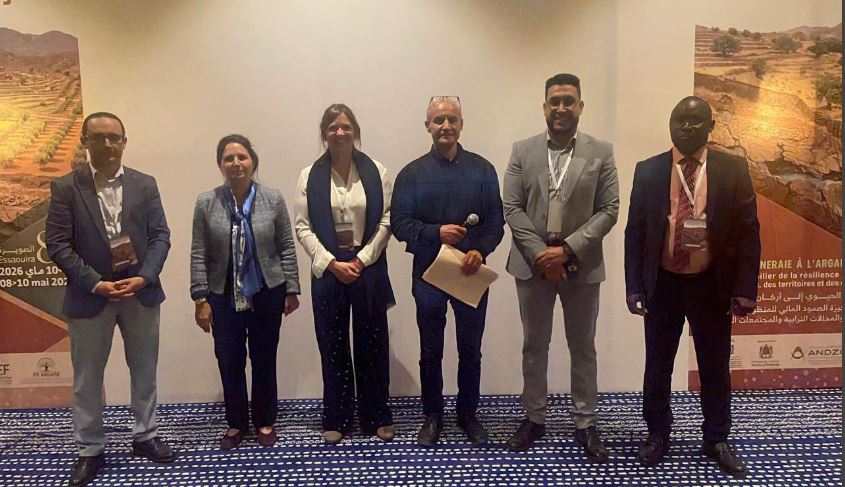
The congress provided an important opportunity to reinforce collaborative approaches for sustainable development in Mediterranean Biosphere Reserves, while highlighting the relevance of common projects in fostering resilient landscapes and supporting local communities.
The RES-MAB project funded by PRIMA promotes innovative and integrated approaches for resilient Mediterranean Biosphere Reserves. UNESCOMED collaborates with the project spreading its outcomes among Mediterranean Biosphere Reserves.
8 October 2026
The International University Campus for Mediterranean Biosphere Reserves brings together students and researchers at Castellet Castle
30 September 2026
Italy’s Monte Peglia UNESCO MAB Biosphere Reserve joins the MedMAB network, bringing the network to 73 Biosphere Reserves.
28 September 2026
· At the III Spanish Congress of Biosphere Reserves, the La Siberia–La Palma Strategic Action Plan 2026–2035 for the Spanish Network was approved.
· UNESCOMED participates in the congress showing how Mediterranean cooperation boosts resilience.
· La Siberia, host of the congress, shows how the designation as a Biosphere Reserve is an opportunity for the territory.