The 5th World Congress of Biosphere Reserves confirmed the Mediterranean’s leading role in science, innovation, and cooperation.
The International Center for Mediterranean Biosphere Reserves actively participated in the Congress (two plenary sessions, three side events, and three network meetings), showcasing how Mediterranean Biosphere Reserves foster climate resilience, biodiversity conservation.
This global congress, organized under UNESCO’s Man and the Biosphere (MAB) Programme, aimed to review progress achieved, strengthen cooperation, and adopt the Hangzhou Strategic Action Plan 2026–2035, which will guide the program’s priorities for the next decade.
A benchmark in public-private collaboration
Ms. Elena Salgado, President of the Abertis Foundation, spoke in the plenary session dedicated to the role of the private sector in managing Biosphere Reserves. She emphasized that “private companies have the responsibility to go beyond regulatory compliance and achieve transformative change that creates measurable positive impacts on nature and society.”
She also highlighted the success of the public-private partnership model of the International Center for Mediterranean Biosphere Reserves, which combines stable funding with scientific expertise, practical governance rooted in the territory, and an integrated vision of economic, social, and environmental dimensions.
MedMAB: a network for socio-ecological resilience
As the technical secretariat of the Mediterranean Biosphere Reserves Network (MedMAB), the Center emphasized the importance of thematic networks such as MedMAB in achieving the United Nations’ objectives. Since 2018, this network has mobilized over €6 million in European projects, directly benefiting local communities while promoting applied research, innovation, and knowledge transfer.
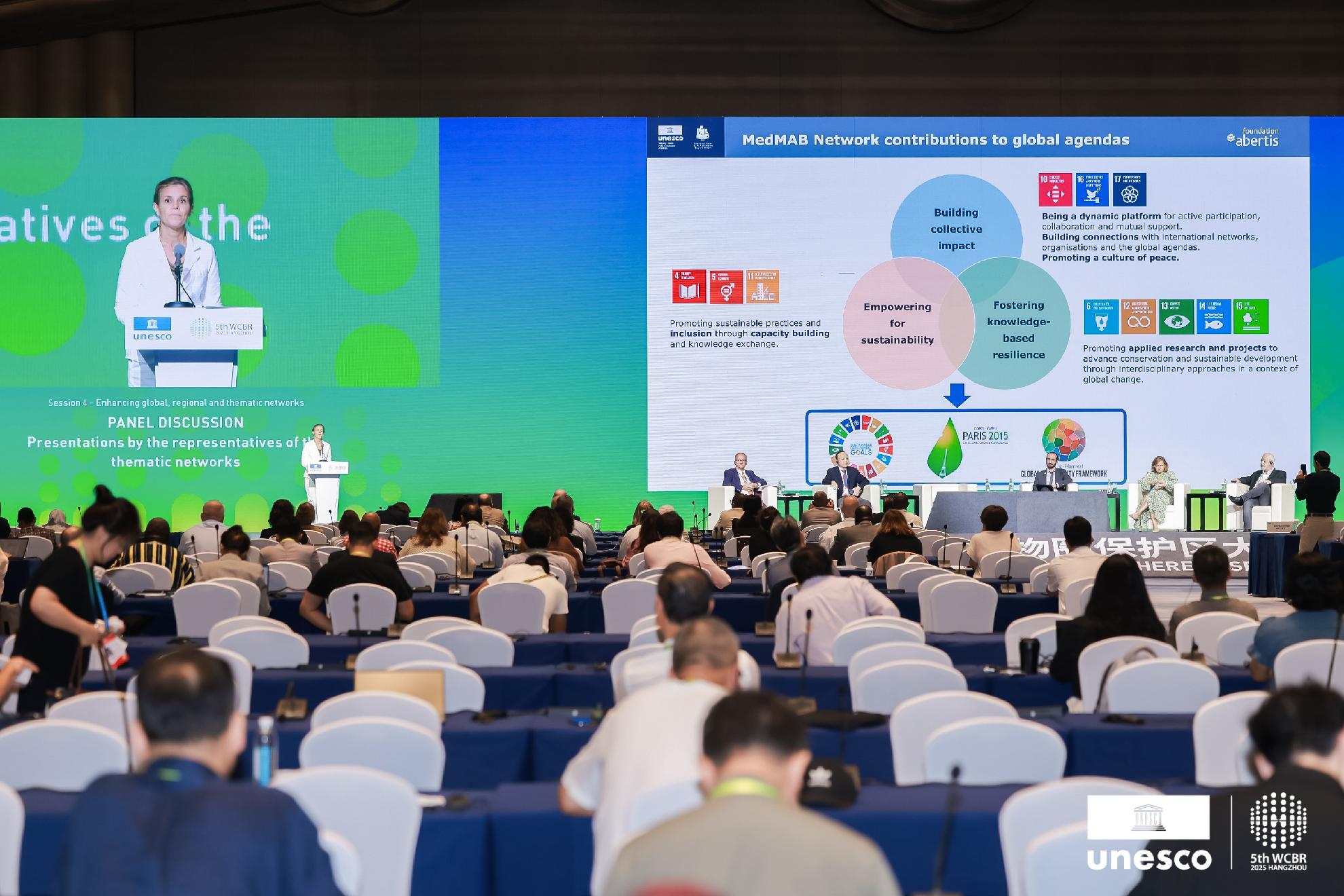
Ms. Georgina Flamme, Director of the Abertis Foundation, and Ms. Alba Bonás, MedMAB Coordinator, highlighted how the network transforms Biosphere Reserves into living laboratories where innovative solutions to global challenges — such as climate change, biodiversity loss, and sustainable economic development — are co-created and tested.
Dr. Mari Carmen Romera reinforced this vision by presenting concrete examples from the PRIMA RES-MAB project. In the plenary session “Women in Biosphere Reserves”, Ms. Beni Rodríguez, president of the Manager’s Board, manager of the Alto Bernesga Biosphere Reserve and partner of the RES-MAB project, showcased how Biosphere Reserves can drive gender equality, innovation, and resilience.
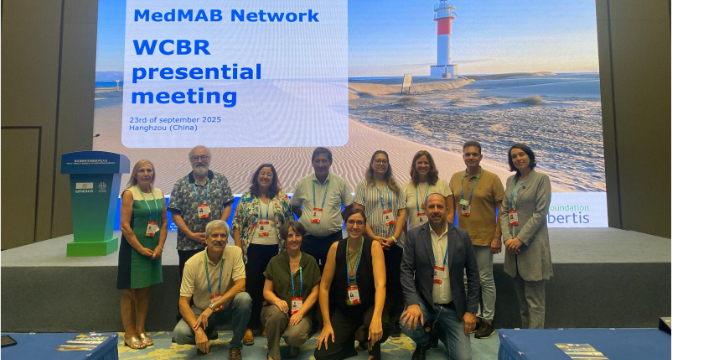
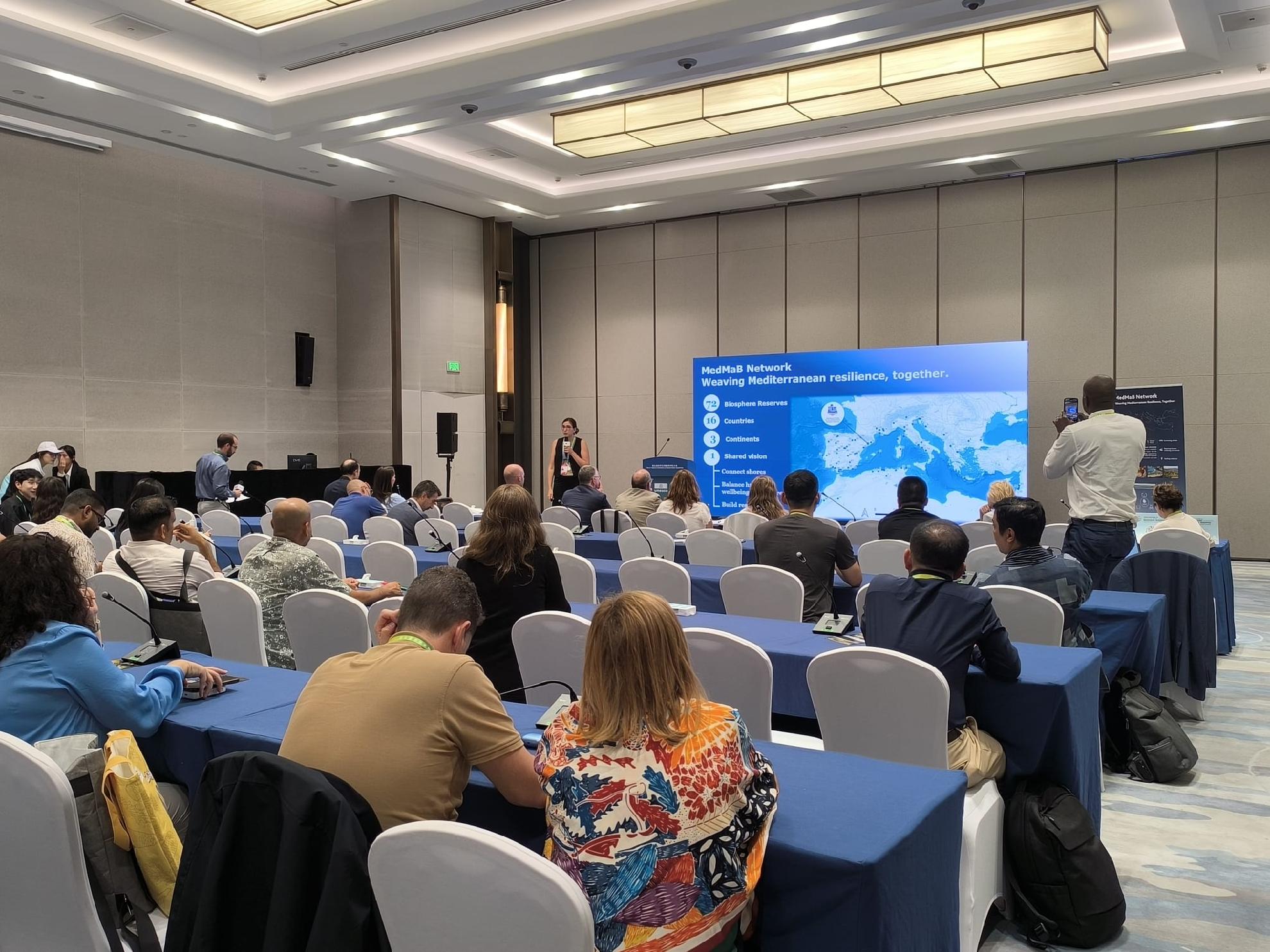 An internal meeting with MedMAB members was also held to discuss the draft of the 2026–2030 Action Plan, aligned with the new Hangzhou Strategic Action Plan. The network also participated in internal meetings of the IberoMAB and EuroMAB regional networks to share updates and future strategies.
Contributions to global goals
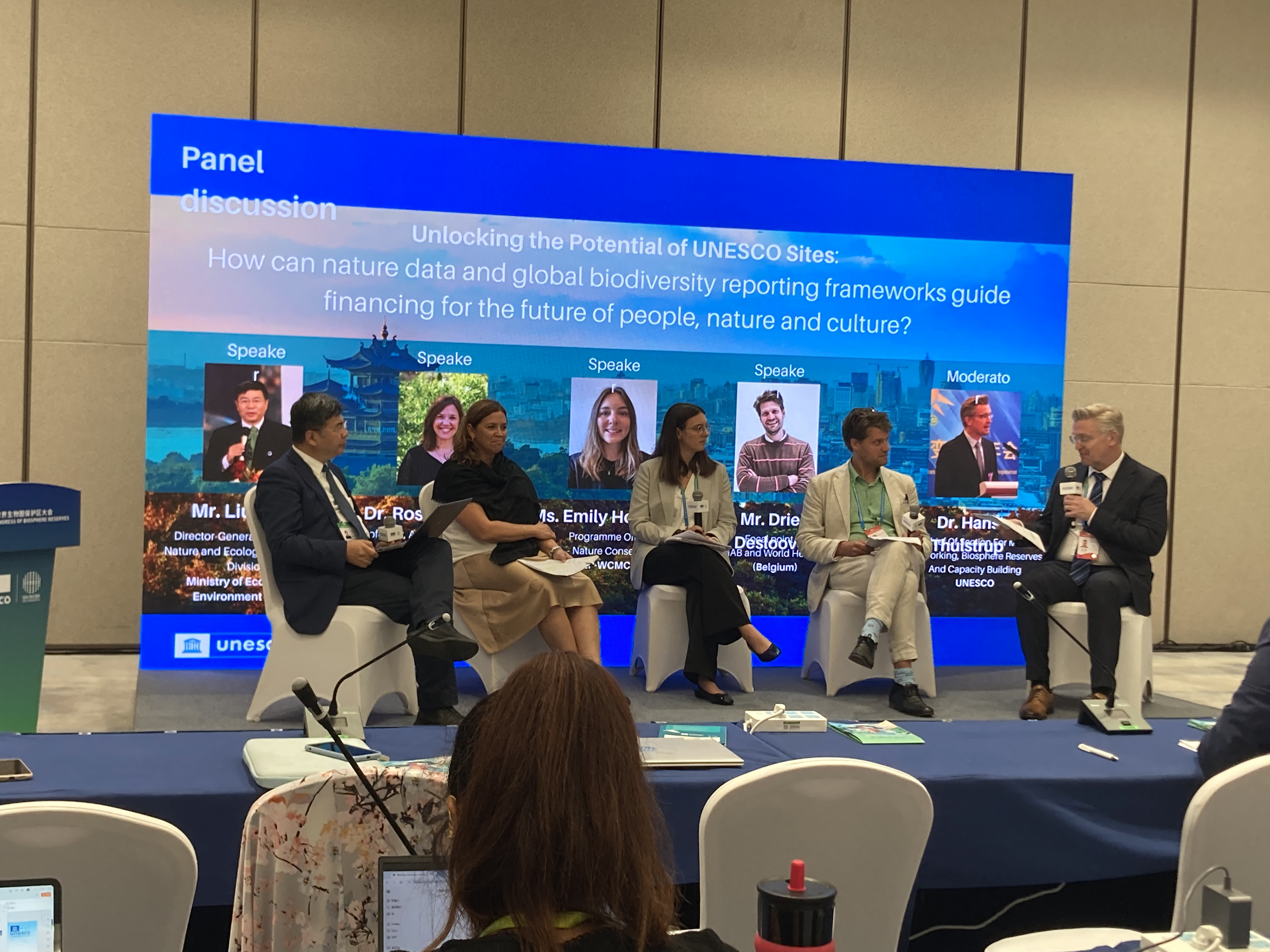 In the side event “Key insights from the first global biodiversity and climate assessment of UNESCO sites”, Dr. Roser Maneja, Professor at UAB and Scientific Director of the Center, emphasized how Biosphere Reserves can align with frameworks such as the Kunming-Montreal Global Biodiversity Framework and the SDGs to enhance their recognition and support. By adopting global monitoring frameworks, Biosphere Reserves can make their contributions more visible and comparable, guiding investment, amplifying impact, and strengthening their role in achieving global sustainability goals.
Biosphere Reserves are key platforms to drive transformative change at a decisive moment for our planet.
With the joint leadership of the Abertis Foundation and the CTFC, the International Center for Mediterranean Biosphere Reserves is consolidating its role as a strategic hub connecting local action with global priorities — proving that public-private collaboration can generate lasting, tangible impact for planetary sustainability.
30 September 2026
Italy’s Monte Peglia UNESCO MAB Biosphere Reserve joins the MedMAB network, bringing the network to 73 Biosphere Reserves.
18 September 2026
From 14 to 18 September 2026, EuroMAB 2026 brought together members of the UNESCO Man and the Biosphere (MAB) community in the Mount Arrowsmith Biosphere Region, Canada, to exchange knowledge, share experiences and explore new ways of working together for people and nature.
7 July 2026